About a month ago, I stopped overthinking and decided to run a real experiment.
Not a startup.
Not a big launch.
Not “MRR screenshots on Twitter”.
I just wanted to answer one honest question:
Can a small, focused AI tool actually make money on an AI marketplace?
So I built a YouTube Thumbnail Generator and published it on Mulerun:


Here’s what happened.
The results after 30 days
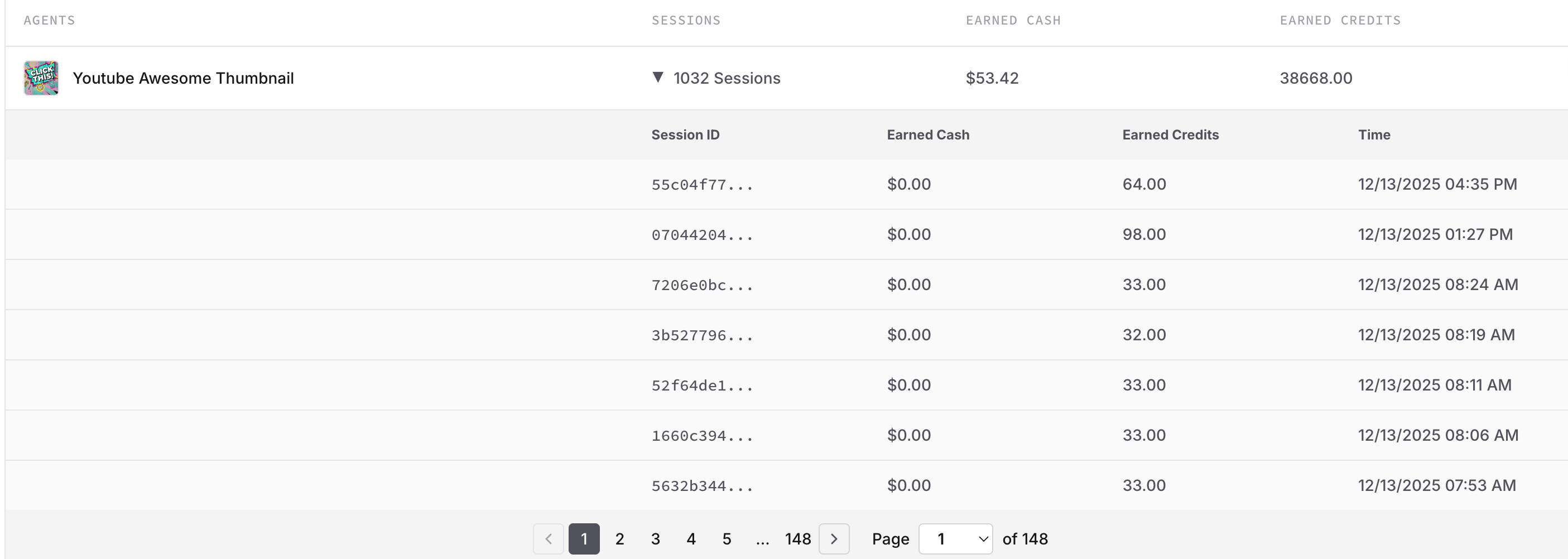
After one month, the outcome looked like this:
- $100 in cash earnings
- $380 worth of Mulerun credits
- Ongoing access to AI models using those credits
One small clarification about the numbers above.
The $100 in cash didn’t come from a single source.
$50 came directly from user usage and billing.
The other $50 was a monthly reward from Mulerun.
Because this tool had relatively high usage during the month, it ranked within the top group of tools by activity, and the platform rewarded active builders accordingly.
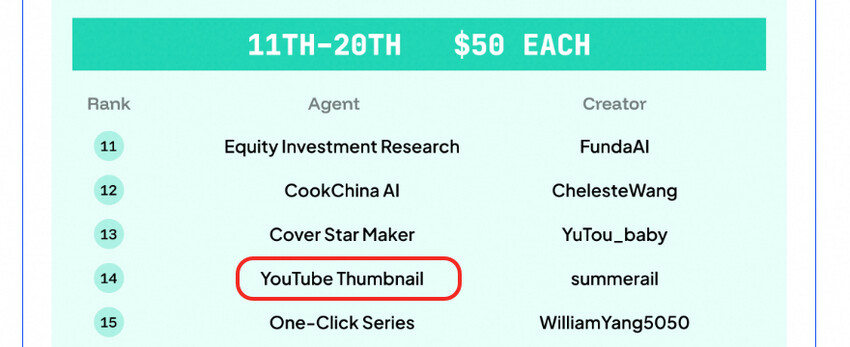
What’s important isn’t the ranking itself.
It’s the signal behind it.
Mulerun is still in an early stage, and the platform is actively encouraging developers to build, ship, and experiment. Instead of extracting value, it’s redistributing value back to builders.
That makes this a particularly good time to enter:
- lower competition
- faster feedback
- and real incentives for shipping useful tools
This isn’t a success story about scale.
It’s a story about a working monetization loop.
And that matters more than the number itself.
What the tool does (and why it’s simple)
The tool does exactly one thing:
Generate usable, eye-catching YouTube thumbnails.
No complex settings.
No long onboarding.
No “AI everything” positioning.
Users come in, describe their video or upload context, generate thumbnails, often multiple at a time, and leave with something they can actually use.
That focus turned out to be the key.
The AI and tech stack behind it
This product was built with AI from day one.
- The core image generation is powered by the Nanobanana model
- The frontend was built using a vibe-coding approach — fast, iterative, and biased toward shipping
- The web app is deployed on Cloudflare, making it easy to go live and stay reliable
But the most important part wasn’t the model or the stack.
It was how everything was connected.
Why Mulerun made this dramatically easier
Instead of building everything myself, I integrated the tool directly into Mulerun.
That single decision removed a huge amount of friction.
I didn’t need to:
- integrate Stripe or PayPal
- deal with webhooks, payments, or payouts
- implement Google login or user authentication
- worry about account systems or billing logic
Mulerun handled:
- user authentication
- usage tracking
- billing and credits
- payouts
I just focused on:
building something useful and making sure it worked well.
That’s why this project took weeks instead of months.
Where the money actually came from
The $100 didn’t come from hype.
It came from:
- clear value per generation
- users willing to pay for speed and convenience
- batch usage (people generating multiple thumbnails in one session)
Mulerun’s usage-based billing makes this very transparent.
Every generation has a cost.
Every use is intentional.
As a builder, this forces a mindset shift:
not “Is this cool?” but “Is this useful right now?”
Why the $380 credits mattered more than expected
At first, I only looked at the cash.
Then I realized the credits were the real leverage.
Those $380 in credits mean:
- I can keep experimenting without worrying about model costs
- I can iterate faster and test new ideas immediately
- My next tools don’t start from zero
Cash pays once.
Credits compound.
They turn a small win into momentum.
What I learned about monetization on Mulerun
Three lessons stood out clearly:
- Small tools can monetize
You don’t need to make a platform, you need a clear value moment. - Focus beats features
One painful problem beats ten vague ones. - Infrastructure matters less than friction
Removing auth and payment complexity changes everything.
This wasn’t about being clever.
It was about being obvious.
This is not the end — it’s the baseline
I don’t see this as “I made $100”.
I see it as:
- proof that the loop works
- proof that marketplaces can reward builders early
- proof that shipping beats polishing
With credits in hand, I can keep building.
And the next tool already has a head start.
If you want to see the exact tool that made this possible, you can check it out here:
If you’re an indie builder wondering whether it’s worth shipping something small:
It is.
Start simple.
Ship fast.
Let real users teach you the rest.
What’s next
In the next posts, I’ll share more details about the process behind this project, specifically how I use vibe coding to build a web app, how I deploy it on Cloudflare, and how I integrate everything into Mulerun step by step.
Nothing fancy.
Just a practical, builder-focused walkthrough from idea to launch.
If you have any questions about the tool, the stack, or the monetization process, feel free to let me know.
I’m happy to share what I’ve learned.